Meeting Ethel
A sculptural journey across the Ethels of the Peak District

Meeting Ethel is a sculptural project rooted in my love of The Peak District. It has evolved through photographing my sculptures in the landscape and exploring how these sit within, and respond to, the natural environment.
The title emerged after I learned that the Peak District’s hills over 400 metres are known as “Ethels,” named after Ethel Haythornthwaite — the environmental campaigner and poet whose work helped safeguard the landscapes around Sheffield. She played a key role in founding the Campaign to Protect Rural England (CPRE) https://www.cprepdsy.org.uk/ which went on to secure land now cared for by the National Trust, ensuring it remains publicly accessible.
As I embark on this sculptural journey, I hope to learn more about people like Ethel Haythornthwaite — past and present — who have shaped, or been shaped by the Peak District. I also hope to deepen my understanding of the landscape and its nature. In turn, these encounters will inform my sculpture, strengthening its connection to the place and its people.
Stanage Edge
White Moss Path
Ethel
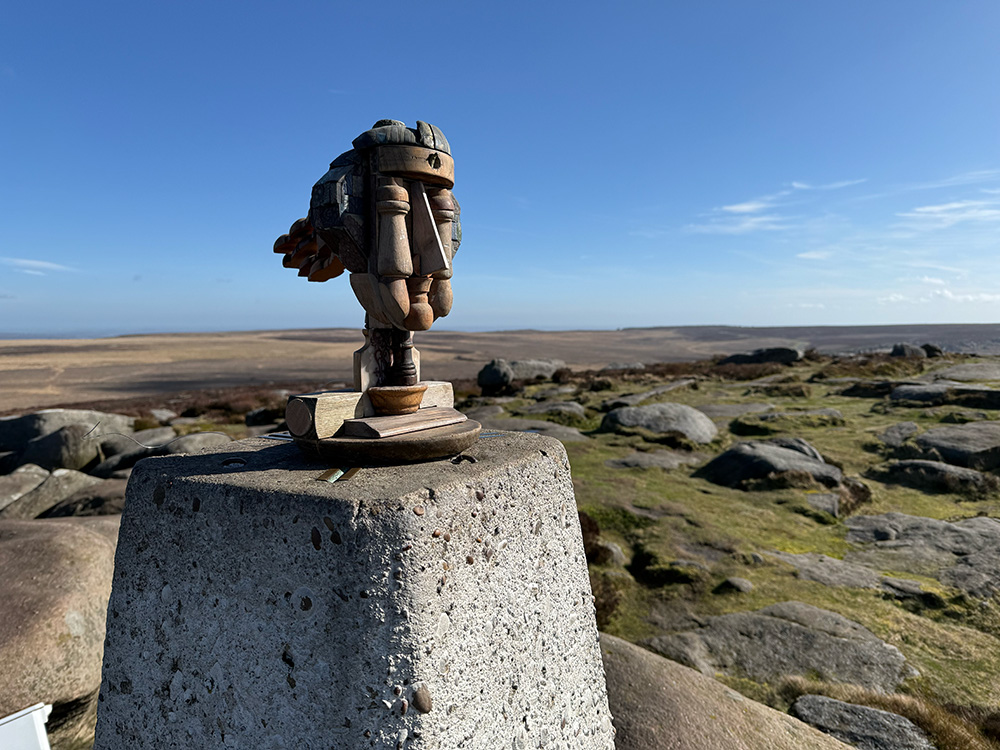
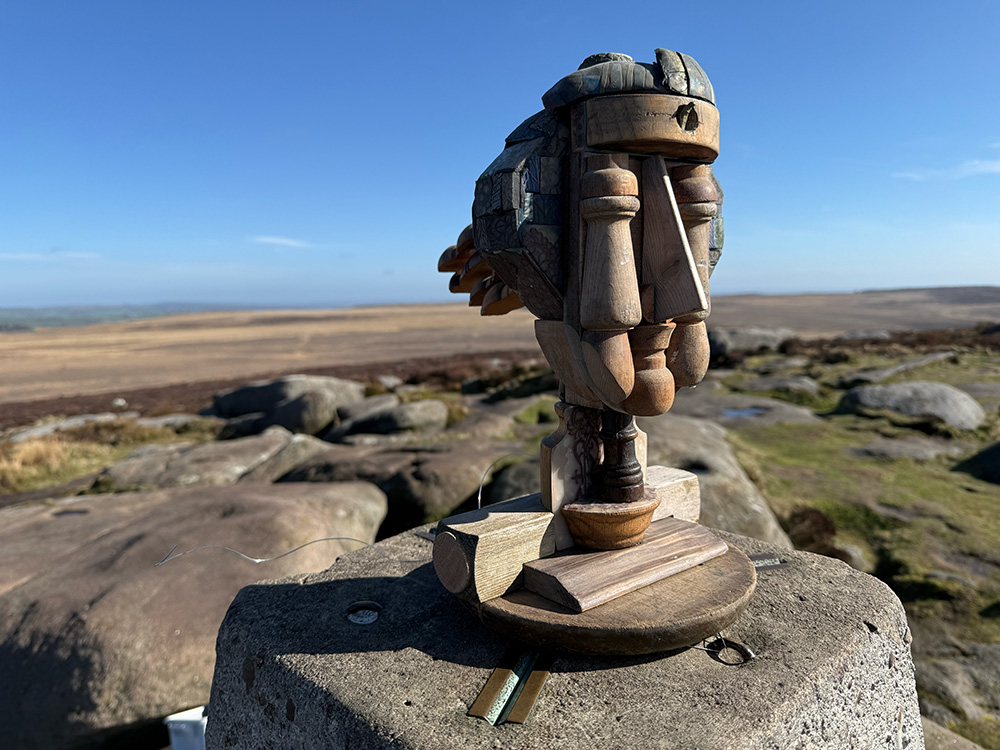
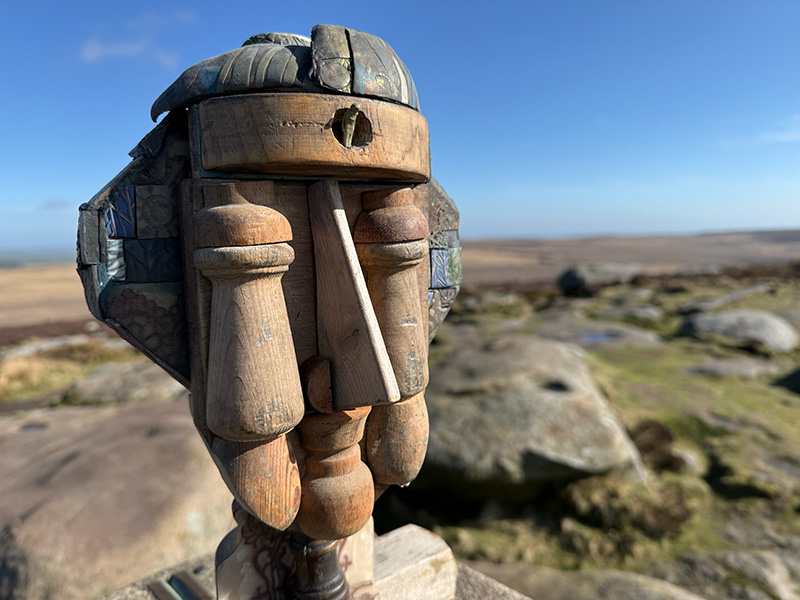
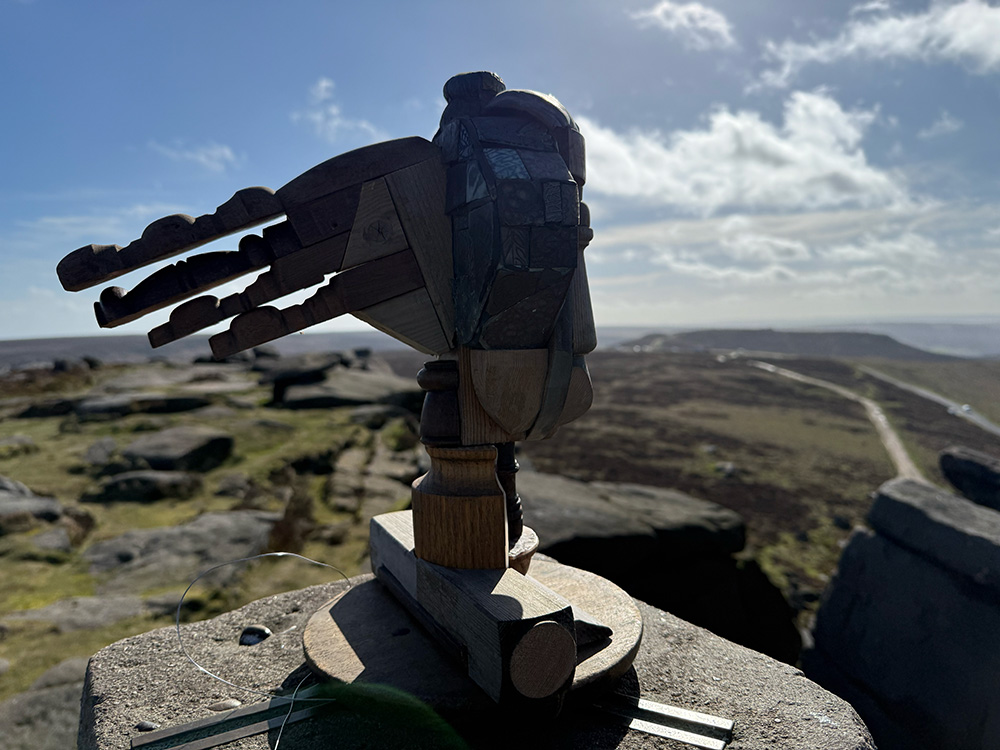
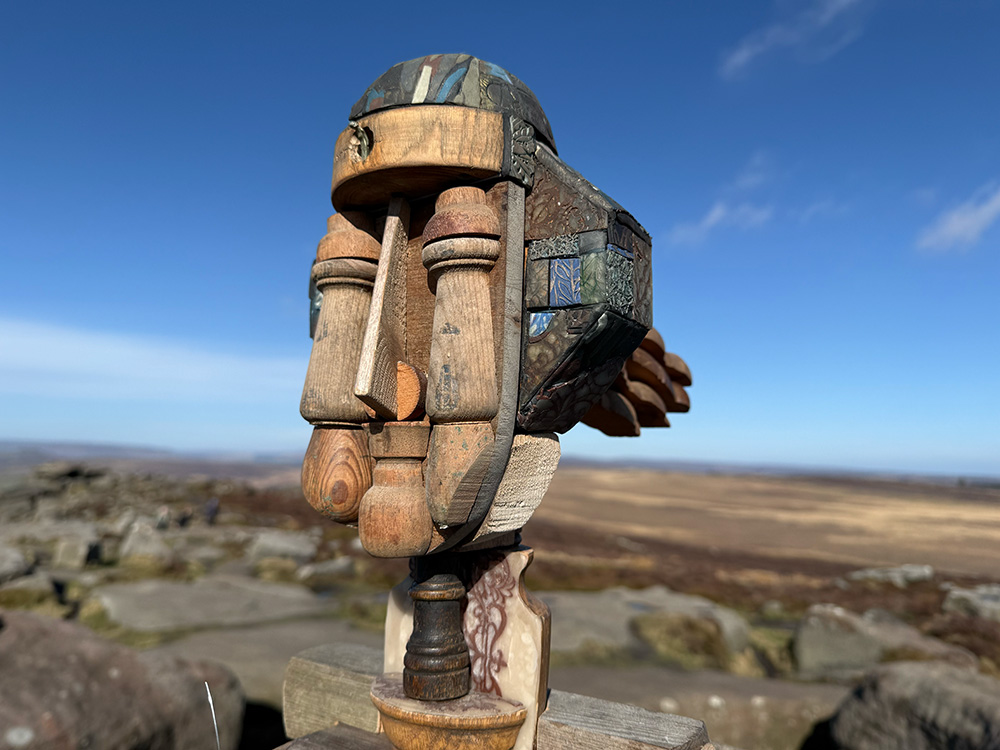
Whilst photographing this figurative sculpture near White Moss Path, Stanage Edge, a passing rambler told me the trig point I was using as a base was known as an “Ethel”. Discovering there are 95 Ethels across the Peak District sparked my curiosity and seeing the sculpture in dialogue with the landscape planted the seed for Meeting Ethel.
Burbage Edge
Higgor Tor
Angel of Sheffield

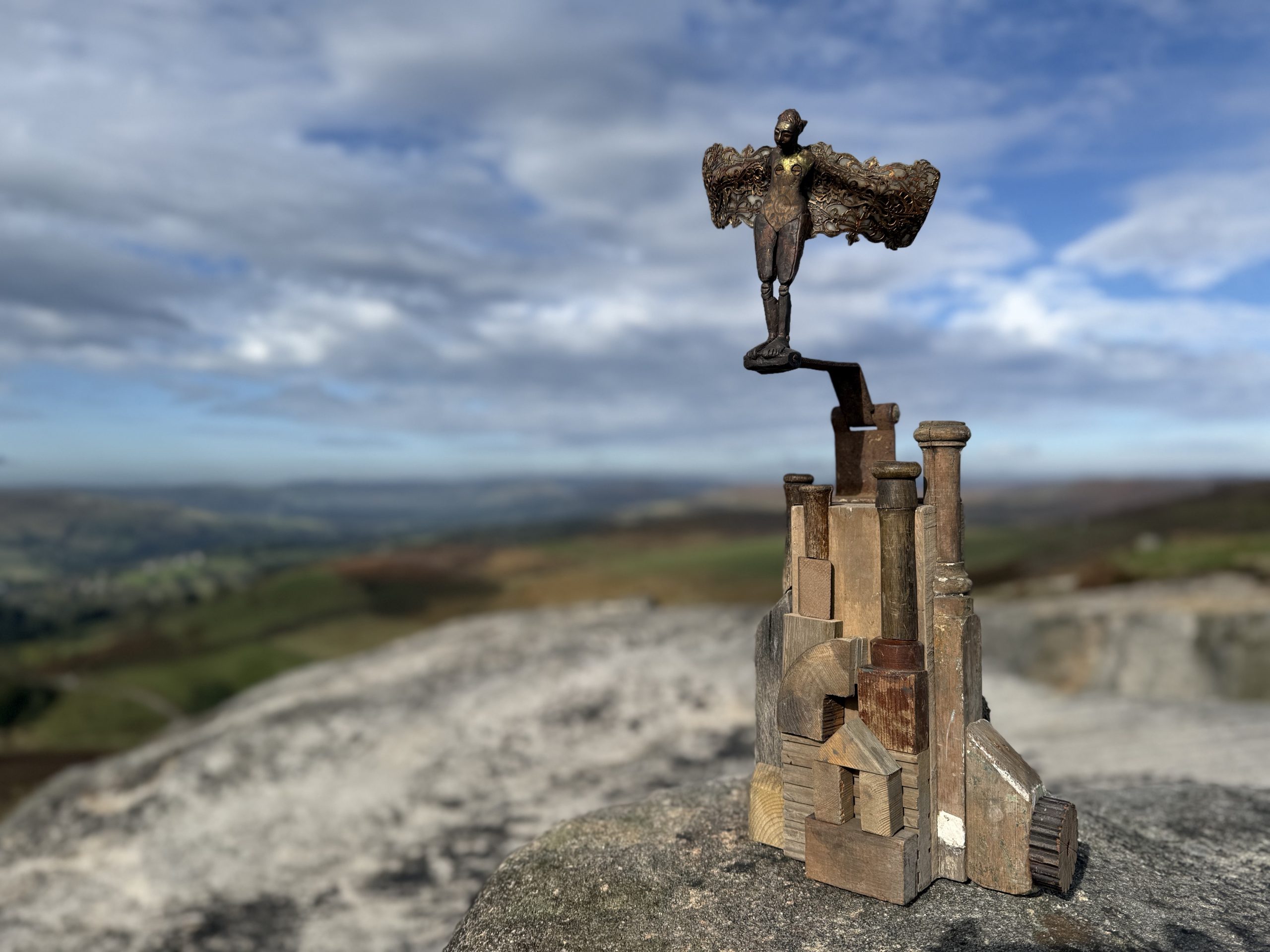

Higgor Torr
A prominant gritstone outcrop, which provides great views down the Hope Valley, with Castleton and Mam Torr in the distance.


My second Ethel, Higger Tor on Burbage Edge, lacks the convenience of a trig point or triangulation pillar. Instead, it is recognised as an Ethel for its distinctive gritstone outcrop.
As the most accessible Ethel from my home town of Sheffield, it felt like a natural choice for the next sculpture. Drawing on elements from the Steel City, the work reflects the importance of access to wild open spaces for people living in the city. Ethel Haythornthwaite believed that the countryside should be a birthright for all, not a privilege for the few.
Shatton Moor
Sir William Hill
3D Landscape
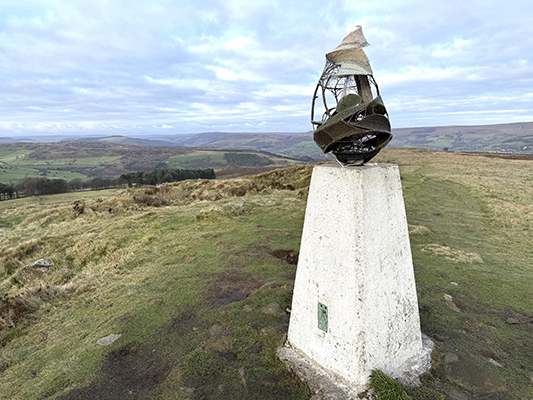
Ethel number three, Sir William Hill, marked a departure from my usual way of working. I wanted to spend time in the landscape first, gaining a deeper sense of the place before beginning the piece. Being there shaped both the form of the work and my response to it.
At the same time, I needed to develop a way of carrying the sculpture to the summit on my own. This practical constraint led me to experiment with lighter materials and construction methods, resulting in a sculptures that was lightweight yet robust enough for the environment.
Stanage Edge
High Neb
Charlotte
High Neb looks down over Hathersage and North Lees Hall, where Charlotte Brontë found inspiration in 1845 for her novel Jane Eyre. Standing there, I wondered whether Charlotte herself had paused at this very spot. She loved the freedom the open moorland offered, and it felt only fitting to dedicate this next sculpture to her—a place to honour her and her work.